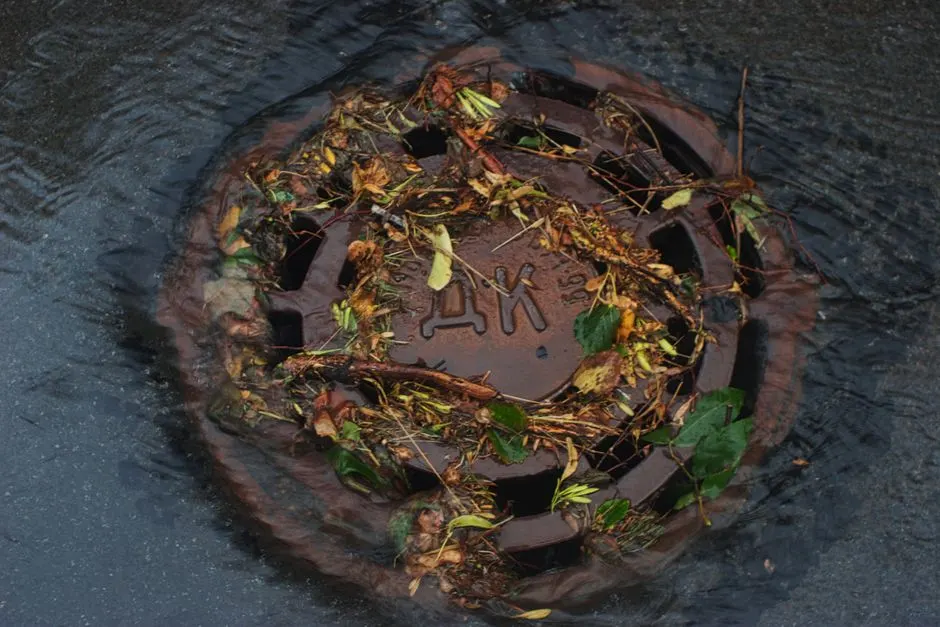
Winter sewer problems in San Jose and how to prevent them come down to three things: rain-saturated soil, tree roots hunting for water, and grease that hardens as ground temperatures drop into the low 50s. San Jose does not freeze its sewer lines the way the Midwest does, but our wet season from November through March pushes clay soil, roots, and older pipes into failure mode. This guide walks through the specific problems we see across Santa Clara Valley, how to prevent them, and when a slow drain has already turned into a job for a pro.
Why winter hits San Jose sewer lines so hard
San Jose sewer lines fail in winter because water is the enemy, not cold. When the first big storm rolls through in late November, the ground goes from bone-dry to saturated in about 48 hours. Clay soil expands, shifts, and squeezes older cast iron and Orangeburg pipe that has been sitting undisturbed for 50 or 60 years.
That same moisture wakes up roots. Ficus, sycamore, liquidambar, and willow roots travel 20 to 30 feet through wet soil looking for the warmest, wettest thing around: your sewer lateral. A hairline crack in a 1950s clay pipe is a welcome mat. Within one rainy season, a root hair can become a root ball the size of a basketball.
Meanwhile, indoor habits change. Holiday cooking sends more fats, oils, and grease down the kitchen drain in six weeks than in the previous six months. That grease cools in the lateral, sticks to root hairs and pipe walls, and starts building a plug. Add a garbage disposal, and you have the recipe for a December backup.
If you want a baseline on the health of your line before the rain gets serious, a Sewer Camera Inspection San Jose CA takes about 45 minutes and shows you exactly what is growing, cracking, or sagging inside the pipe.
The six winter sewer problems we see most in San Jose
Winter sewer problems San Jose homeowners call us about fall into six categories, and each one has a different fix.
1. Root intrusion at pipe joints
Clay tile laterals installed before 1980 have joints every 3 feet. Each joint is a seam where roots enter. You will notice slow drains in the lowest fixture of the house first, usually a downstairs shower or laundry sink. Left alone, roots fill the pipe and sewage backs up into the lowest drain.
2. Grease and food-fat blockages
Turkey drippings, bacon grease, and salad dressing are the top three culprits we pull out of kitchen laterals in December and January. Grease does not wash away. It coats the pipe, catches paper and wipes, and narrows the flow to a pencil-width channel.
3. Offset or bellied pipe sections
When saturated soil shifts, a section of pipe can drop or separate. Wastewater pools in the low spot, solids settle, and you get repeat clogs in the same place every few weeks. This is the classic "we snaked it in October and it is backed up again in December" pattern.
4. Collapsed or cracked pipe from soil movement
Older cast iron and Orangeburg pipe crack under shifting clay. A crack that was cosmetic in July becomes a full break in February. You will see sinkholes in the yard, sewage odors outside, or unusually green grass in a straight line above the lateral.
5. Stormwater and sump inflow
San Jose's storm drains and your sewer lateral are separate systems, but illegal downspout connections and aging cleanouts let stormwater into the sewer. During a heavy storm, that extra volume overwhelms the line and pushes sewage back into the house.
6. Blocked or missing cleanouts
If your home was built before 1970, you may have one cleanout or none at all. Without a proper cleanout, we cannot access the line efficiently, and a small clog becomes an emergency. A Sewer Cleanout Installation San Jose CA is a one-day job that pays for itself the first time you have a backup.
How do I prevent winter sewer backups in San Jose CA?
You prevent winter sewer backups in San Jose CA by keeping grease out of the drain, managing roots before the rain, and getting a camera inspection on any line older than 30 years. Most of the work is free or cheap. The expensive part is waiting until December 23rd to deal with it.
Here is the prevention routine we walk our customers through every October and November:
- Stop pouring grease down the drain. Pour it into a can, let it harden, and throw it in the trash. Wipe pans with a paper towel before washing. This one habit prevents the majority of kitchen-line backups we see.
- Run hot water for 30 seconds after every kitchen use. It keeps the lateral warm enough that residual grease keeps moving instead of sticking.
- Use mesh drain screens in every tub and shower. Hair and soap scum are the second-most-common cause of winter clogs after grease.
- Flush the line with a root-killing product once in fall and once in spring. Follow the label. Do not mix products.
- Check your cleanout. If you do not know where it is, find it before winter. It is usually a white cap near the foundation or at the property line.
- Watch for slow drains in the lowest part of the house. A shower that drains slowly in October is a sewer problem, not a shower problem.
- Get a camera inspection every 24 months on lines over 30 years old. It is the cheapest way to catch a root ball before it becomes a $12,000 excavation.
If you want the whole routine handled for you, our Sewer Maintenance Plans San Jose CA include an annual camera inspection, a preventative jetting, and priority scheduling if something does back up.
Does cold weather affect sewer lines in San Jose?
Cold weather affects sewer lines in San Jose indirectly: it does not freeze the ground, but it hardens grease faster, slows root growth into a concentrated attack on warm pipes, and increases the volume of water moving through the system during storms. Our overnight lows in January average around 42°F, and the ground rarely drops below 55°F at lateral depth. That is not cold enough to freeze a buried pipe.
What does change is the behavior of everything inside the pipe. Fats that were liquid in August become solid in December. Roots that were dormant in summer push new growth into any crack they can find. And when the first atmospheric river hits, the water table rises, the soil shifts, and every weak joint in the system gets tested at once.
If you live in an area with mature trees and older housing stock, this is the season that finds out whether your lateral is sound. We see it every year in Sewer Line Repair in Willow Glen, where 1920s bungalows sit under 80-year-old sycamores, and in the hillside neighborhoods where soil movement is more aggressive.
When should I schedule winter sewer maintenance in San Jose?
Schedule winter sewer maintenance in San Jose in October or early November, before the first significant rain. That gives you time to fix a root issue or a cracked section on a normal schedule instead of paying emergency rates in a storm.
If you missed the fall window, the second-best time is right now. Lines that are already slow in November will not improve in December. We would rather spend two hours jetting and camera-inspecting a line in November than pull a crew out at 11 p.m. on New Year's Eve.
For commercial properties, restaurants, and multi-family buildings, the schedule is tighter. A Commercial Sewer Services San Jose CA plan usually includes quarterly jetting because grease volume in a commercial kitchen is 10 to 20 times what a house produces.
Common mistakes that turn a slow drain into a winter backup
The mistakes that turn a slow drain into a winter backup are almost always about timing and chemistry. Here is what we see most.
- Using chemical drain cleaner on a main line. Store-bought caustic cleaner eats a channel through the clog and leaves the rest. It also damages older pipe and makes the eventual camera inspection harder to read.
- Snaking a root-clogged line and calling it fixed. Snaking cuts roots but does not remove them. They grow back thicker within 6 to 12 months. Jetting and, in serious cases, Trenchless Sewer Repair San Jose CA address the cause.
- Ignoring a slow drain because "it has always been slow." A drain that has been slow for years is a drain that is 70% blocked. The first heavy rain will finish the job.
- Pouring grease down the drain with hot water. Hot water moves the grease 20 feet down the pipe and lets it cool there. It does not eliminate it.
- Planting trees within 10 feet of the lateral. Roots travel. Ten feet is not enough for a ficus or a willow.
- Waiting until the backup reaches the house. By the time sewage is on the floor, you are looking at $2,000 to $8,000 in water damage on top of the sewer repair.
If you are not sure whether your line is at risk, a Hydro Jetting San Jose CA service scours the pipe walls back to bare clay or PVC and gives you a clean starting point for the winter.
When to call a professional
Call a professional when more than one fixture backs up at the same time, when you see sewage in a floor drain, or when a clog returns within 30 days of being cleared. Those three signs point to a main-line problem, not a fixture problem.
Our team at Sewer Line San Jose Pros handles winter sewer calls across Santa Clara County. We camera the line, tell you what is actually wrong, and give you a flat price before we start. If it is a root issue, we jet it. If it is a cracked section, we can often fix it with CIPP Pipe Lining San Jose CA instead of digging up your yard.
If you are in a neighborhood with a lot of mature trees and older pipe, we also serve Sewer Line Repair in Almaden Valley, where the hillside soil movement and 1960s construction make winter a busy season for us.
Frequently Asked Questions
What winter sewer problems occur in San Jose?
The most common are root intrusion at pipe joints, grease blockages from holiday cooking, offset or bellied pipe sections from saturated soil, and stormwater inflow through aging cleanouts. San Jose rarely sees frozen lines, but the wet season from November to March triggers all four of these within weeks of the first big storm.
How do I prevent winter sewer backups in San Jose CA?
Keep grease out of the drain, run hot water after kitchen use, use drain screens, and get a camera inspection on any line over 30 years old before the first rain. A fall root treatment and a clean cleanout handle most of the risk for under $500 total.
Does cold weather affect sewer lines in San Jose?
Not by freezing them. Our ground stays around 55°F at lateral depth. Cold weather affects sewer lines here by hardening grease faster, concentrating root growth toward warm pipes, and raising the water table during storms, which shifts soil and stresses old joints.
When should I schedule winter sewer maintenance in San Jose?
October or early November, before the first significant rain. If you missed that window, schedule it now. Lines that are slow in November do not improve in December, and emergency rates on a holiday weekend run 1.5 to 2 times standard pricing.
Who can help with winter sewer problems in San Jose?
Sewer Line San Jose Pros handles winter sewer problems across San Jose and Santa Clara County, including camera inspections, hydro jetting, root removal, and trenchless repair. We give you a flat price before work starts and clean up when we are done.
Get help with Sewer Line Repair in San Jose
If your drains are slowing down or you have already had one backup this season, do not wait for the next storm. We will camera the line, show you what is going on, and fix it before it becomes an emergency.
Call Sewer Line San Jose Pros at (669) 232-8571 for winter sewer service across San Jose and the surrounding Santa Clara Valley.